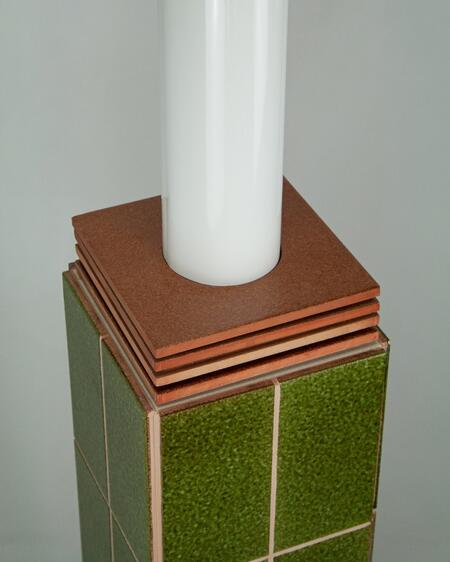
Lamp in ceramic tiles, metal, glass, marble, mdc, plaster
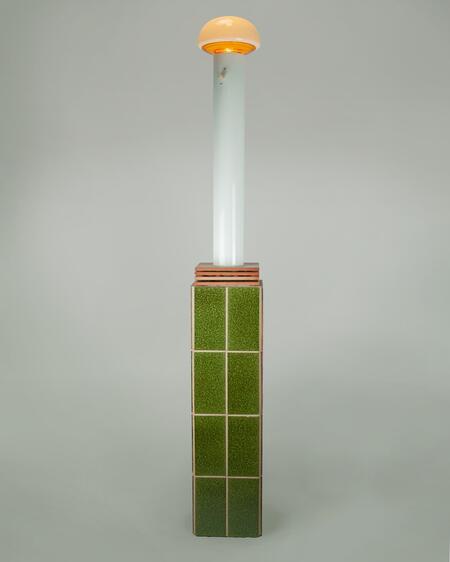
Azulejo Floor Lamp
2026
Every material I work with carries a preconceived boundary. Not a physical one, but a conceptual one: the limit of what it is allowed to be, the role it has always played, the context it has always inhabited. My practice begins precisely at that limit.
For me, the border is not a problem to solve but a condition to work within. Constraint is not the opposite of freedom; it is where invention becomes necessary. When you work only with what is at hand, the question shifts from what you want to make to what the material itself carries. Its materia prima: the inner quality that exists before any use, any direction, any identity is assigned. Something to listen to rather than define.
This is where I find the border most alive: not as a line that divides, but as the space where preconceived identities dissolve and new ones become imaginable. Materials from different families, different histories, different places, brought into the same realm, stop being what they were and begin asking what they could become.
Perhaps that is not so different from what we ask of each other.
The Azulejo Floor Lamp begins precisely at that limit. Tiles, glass, metal, marble: each chosen not for what it is, but for what it could become.
From different families, different histories, different places, brought into the same realm. What is the potential of such an encounter? The question shifts from what something is to what it carries: its materia prima, the inner quality that exists before any use is assigned. Here, new aspirations become possible. For the substance itself. For the maker. Perhaps for the one who looks.
Working only with what is at hand is its own border. But it is here, within constraint, that new ideas surface. The border becomes a place of invention.
The result is a lamp. Dimmable, fluidly shifting and redrawing the line between light and darkness and everything that lives in between.
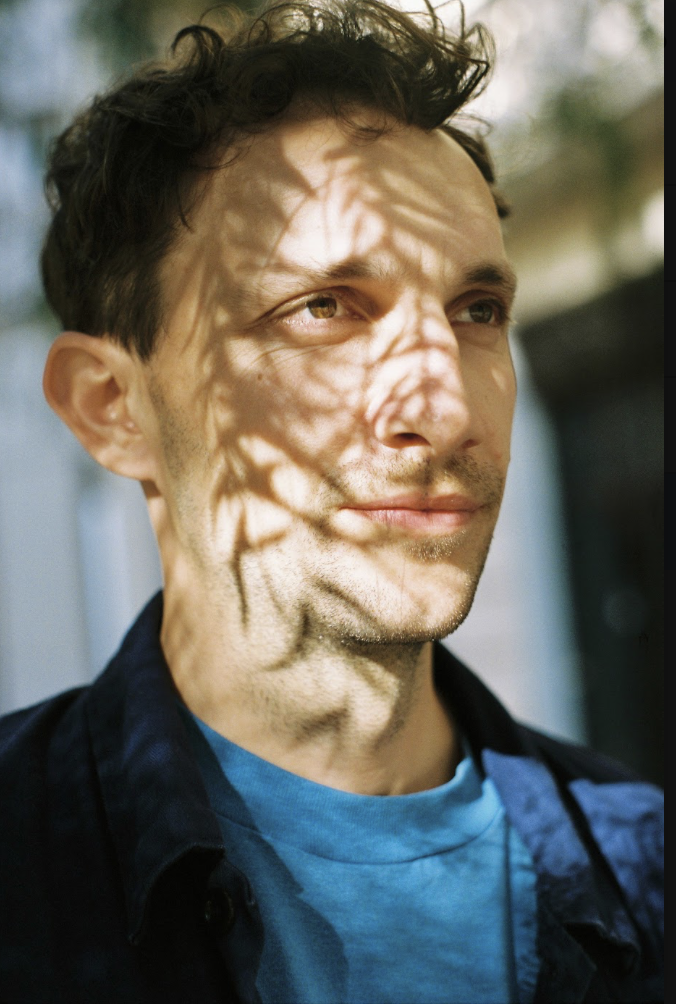
Jannis Schäfer is a German designer and artist working across objects, furniture, lighting and space. He grew up between two kinds of precision — his mother’s eye as a painter, his father’s hands as an engineer — and never found a reason to separate them.
He studied industrial design and material design across Germany, Italy and Spain. Somewhere along the way, material stopped being a variable decided at the end of a project and became the starting point. The collaborator. The brief.
His practice is rooted in post-consumer and natural materials, traditional craft methods, and a making process where the material sets the limits of the form. Not as a trend, but as the only approach that makes sense — ethically, ecologically, and aesthetically.