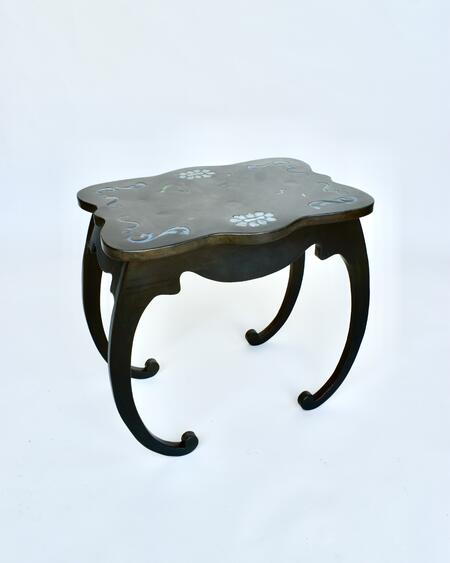
Table in patinated mild steel and HDPE inlay
Pietra Plastica Table
2026
This side table is developed using Pietra Plastica, an inlay technique adapted to post-consumer plastics. The piece exists at the threshold between craft and mass production, permanence and disposability, organic and synthetic.
Patterns reminiscent of different decorative arts periods intertwine with references to industrial debris and living organisms, reflecting a world in which plastic waste no longer exists outside ecosystems, but has become embedded within them. The work draws parallels with wood and stone inlay techniques, blurring distinctions between waste and precious materials.
By integrating waste plastic into techniques historically associated with luxury and permanence, Coline Le Quenven questions the value of waste in the Anthropocene. The work proposes a material language in which waste is no longer considered external to culture or nature, but part of a shared and evolving landscape.
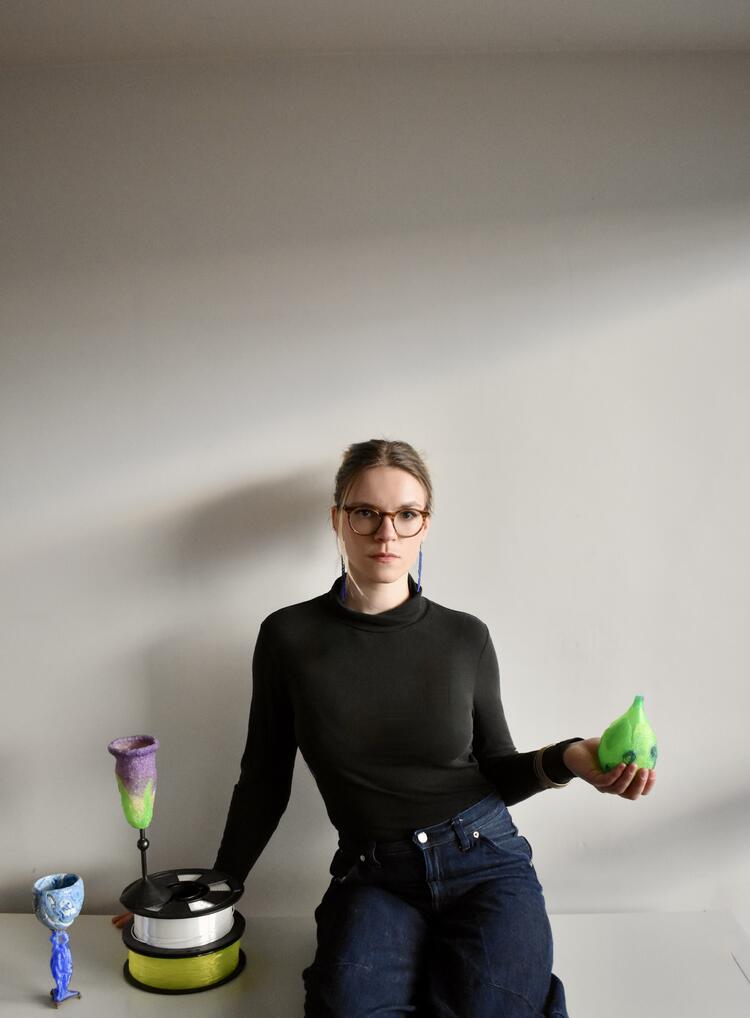
Coline Le Quenven is a designer and artist based in London. Her practice explores the future aesthetics of materials as a way to question human impact on Earth and encourage more sustainable relationships with matter through design, material research, and craft.
After discovering plastiglomerates — hybrid rocks formed from melted plastic fused with natural materials — Le Quenven began transforming locally sourced plastic waste into delicate and ornamental objects. Drawing inspiration from periods such as Antiquity, Art Nouveau, and the Baroque, her work combines digital fabrication processes with historical decorative references, creating a dialogue between past and present.
Through furniture, lighting, and sculptural objects, she investigates how materials associated with disposability can be recontextualised through craft and treated as objects of permanence, value, and beauty.
Her practice currently focuses on producing unique pieces and small series of functional objects.