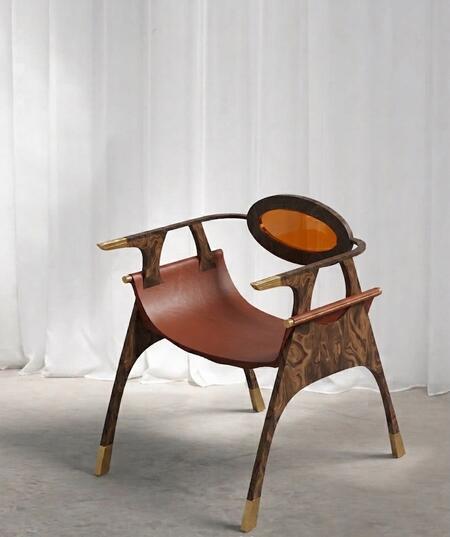
Sedia in legno, pelle, ottone, vetro
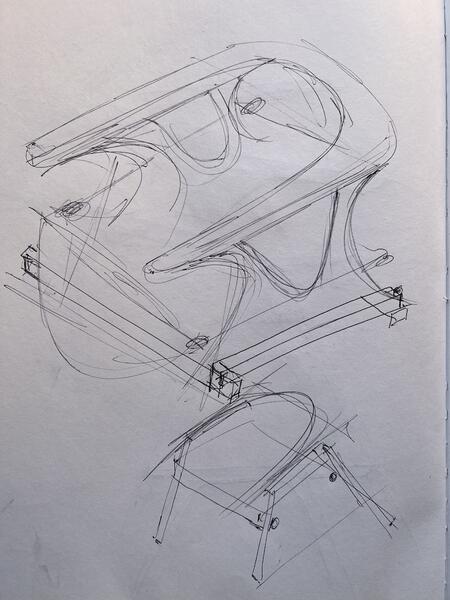
Ukuli
2026
Boundary is never just a line.
It can divide spaces, cultures, and landscapes, but it can also separate moments, memories, and generations.
This year’s theme made me think beyond physical borders. Not only where a boundary exists, but when.
There is a boundary made of distance, and another made of time.
In the Hamer tribe in Ethiopia, there is a ritual called Ukuli Bula that marks the boundary between childhood and adulthood. More than a ceremony, it is a physical and symbolic transition into a new identity.
During the ritual, a young man, called Ukuli, must run across the backs of a line of bulls, four times, without falling. A test of balance, courage, and control.
Only by succeeding he can be recognized as an adult, allowed to marry, and become responsible for his own cattle and future.
Before the jump, his body is transformed through gestures and markings: sand, paint, shaved hair, and clay become symbols of change and preparation.
At the center of the backrest, a rotating orange glass ellipse becomes a symbol of time in motion, continuous, cyclical, never still as the Sun.
Its movement also recalls the repeated run of the young initiate during the Ukuli Bula ritual, endlessly crossing the boundary between youth and adulthood.
Glass was chosen to embody the fragility of this boundary. Transparent yet breakable, it exists in a delicate tension between presence and disappearance.
Just like the transition and the boundary between youth and adulthood.
The armrests end in shapes inspired by bull horns, a direct reference to the animals at the center of the ritual. Rather than reproducing them literally, the form becomes more essential and sculptural, almost abstract, turning a cultural symbol into a design language.
Brass was chosen for its warm, golden presence and its ability to age over time.
Unlike the fragility of glass, brass introduces a sense of strength, resistance, and permanence, embodying the endurance required to cross this boundary.
A border is also the moment in which identity shifts: the fragile threshold where one condition ends and another begins. Inspired by the Hamer ritual of Ukuli Bula, the project transforms a rite of passage into a contemporary object suspended between symbolism and function.
The rotating glass ellipse embodies time, repetition, and instability: a continuous movement that recalls the initiate crossing the same boundary again and again. Its transparency speaks about the delicacy of transition, while the brass horn-shaped armrests evoke strength and endurance.
Fragility and permanence coexist in tension, just as every transformation contains both loss and becoming.
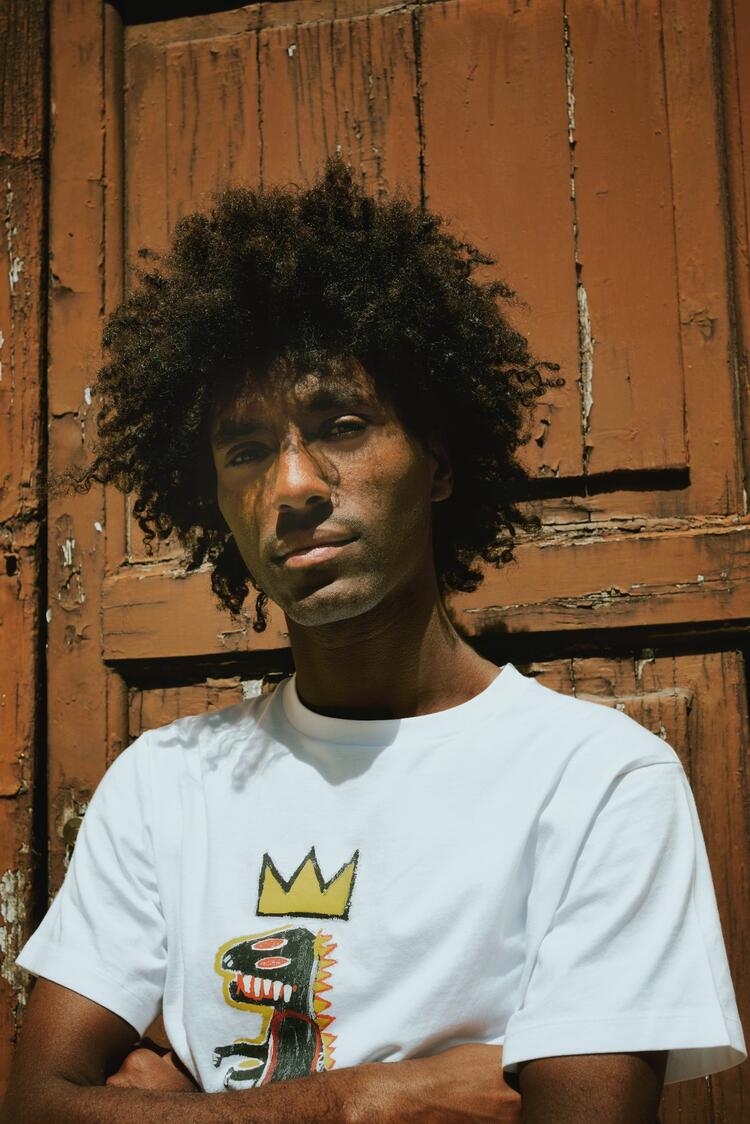
Born in Ethiopia and raised in Milan, Abreham Brioschi is a designer whose practice is shaped by the encounter between Ethiopian culture and contemporary Italian sensibility. His work reinterprets Ethiopian symbols, forms, and traditions through an essential contemporary language, combining cultural authenticity, craftsmanship, and refined design.
His practice is rooted in collaborations with local artisans and factory, a strong focus on natural materials, especially wood, which remains central to his research and deeply connected to African sculptural traditions.
This marks his second participation in the Lake Como Design Festival.